


Table of Contents
Introduction
Search engine optimization is undergoing a profound transformation. Experts predict that by 2029, nearly 90% of informational queries will be handled by neural networks capable of “understanding” user language – namely, LLMs (Large Language Models). The online search experience as we know it is rapidly evolving: today, more than 27% of users in the United States already rely on AI tools instead of traditional search engines to find information.
Neural networks have become firmly embedded not only in the workflows of a relatively small group of professionals, but also in everyday life. By 2026, ChatGPT – widely seen as the public face of the AI industry – surpassed 800 million users, while Google Gemini reached 750 million active users.
AI-powered search tools have fundamentally changed the way people look for information. Instead of typing in keywords, users now ask questions. These systems not only deliver faster results, but also provide more structured and comprehensive answers.
At the same time, AI search engines are raising legitimate concerns within the PR community. Much depends on where LLMs source their data and how that information is presented. In their effort to go beyond traditional search, AI models may proactively surface undesirable, unverified, or in some cases even inaccurate information.
In 2025, Norwegian citizen Arve Hjalmar Holmen filed a complaint against OpenAI after asking ChatGPT a simple question about himself: “Who is Arve Hjalmar Holmen?” The response falsely claimed that he had murdered his children and had been sentenced to 21 years in prison – despite the fact that he had never been charged with any crime. This case illustrates a broader phenomenon known as “AI hallucinations.”

ChatGPT’s response to the query “Who is Arve Hjalmar Holmen?” Source: https://noyb.eu/
Against the backdrop of the growing popularity of LLM-based AI systems, experts are increasingly questioning the effectiveness of traditional approaches to online reputation management (ORM). In practice, this points to the emergence of a new service category: enhancing the visibility of brands, companies, or individuals in AI-generated responses — often referred to as “AI visibility” – as well as managing how information appears in AI outputs, known as Generative Engine Optimization (GEO).
As a result, professionals operating in today’s information landscape need to understand how AI-powered search systems work and how to influence their outputs. In the United States, GEO services began emerging as early as 2024, with demand primarily driven by large enterprises.
At the same time, many PR professionals have yet to fully account for AI-driven outputs when promoting brands, companies, or individuals such as business owners and top executives. The uncertainty is compounded by the nature of AI systems themselves: best practices are still evolving, and the expertise accumulated in online reputation management has yet to be fully systematized.
However, the steady annual growth in the share of AI-processed queries makes one thing clear – ignoring AI is no longer an option.
Why Visibility in AI Outputs Matters
AI visibility is rapidly shifting from an optional strategy to a necessity. The data cited above shows that ignoring this channel means losing the trust of a significant share of your target audience — as well as the opportunity to communicate the values of a brand or individual.
Traffic Growth and Shifting User Behavior
Statistics reveal a qualitative shift in how people consume information. According to data software experts Seomator, when AI-generated responses appear in search results, 60% of queries are resolved without users clicking through to the original source. Increasingly, users are satisfied with AI answers and feel less need to independently verify information. References in AI outputs indicating that certain statements are personal or subjective are often overlooked by the person making the query.
Against this backdrop, the ability to influence AI-generated responses is becoming increasingly important. A key metric in this context is AI visibility: whether specific information appears in a user’s AI response depends on how neural network algorithms interpret the original content.
It is equally crucial to understand that a query for an AI system is different from a search engine query. AI users tend to pose longer, more natural questions, and the interaction often resembles a dialogue. This shifts the focus from exact keywords to semantic meaning and user intent, requiring a rethink of traditional SEO approaches. As a result, conventional methods of presenting information, which work well for classic search engines, are becoming less effective.
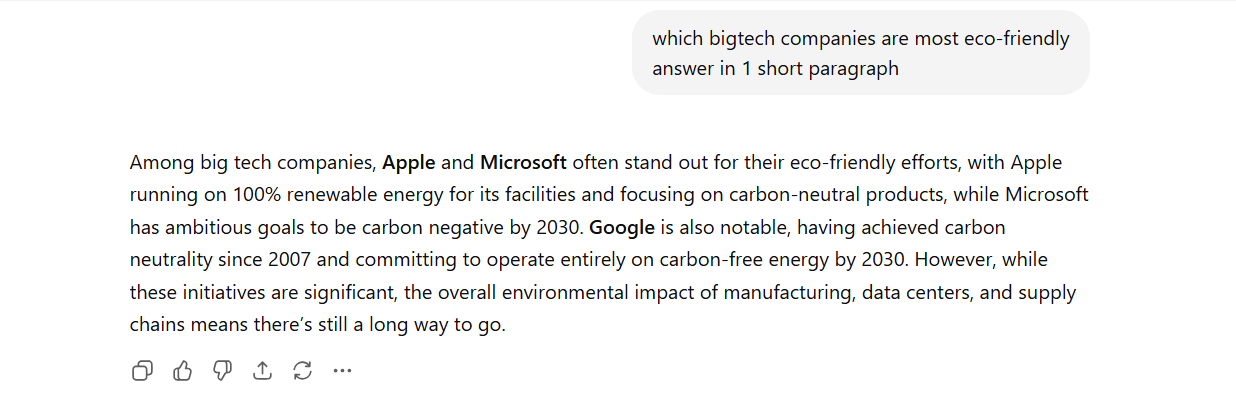
AI Search queries include additional conditions – parameters for the response
High Conversion Rates of AI-Driven Traffic
One of the strongest arguments for optimizing for AI outputs is the high quality of this traffic. Studies show that users coming from AI-generated responses convert three times better than those from traditional channels.
At the same time, AI can sometimes give an extra “boost” to sources containing undesirable or misleading information. Essentially, the AI provides a recommendation, and the user either trusts it or clicks through, increasing the traffic to that source — which, in traditional search results, might have remained unnoticed on the second, third, or even lower pages. In this context, ignoring AI-generated outputs effectively means giving potentially unreliable information a greater chance of being seen.
How AI Models Work and Where They Source Data
To succeed in the emerging era of artificial intelligence, PR professionals need to understand the inner workings of neural networks. Unlike traditional search engines, which rank web pages, AI-powered tools interpret the context of queries and provide ready-made answers.
Training Datasets and RAG
The foundation of neural networks lies in complex machine learning and natural language processing algorithms. These systems are trained on massive text datasets, enabling them to understand and generate human-like text. The training process for a language model involves analyzing billions of documents, during which the algorithm learns to recognize meaning, context, and the relationships between words and phrases.
Modern neural networks also employ RAG (Retrieval-Augmented Generation) – an architectural approach that combines a language model with an external knowledge base. This allows an AI assistant to retrieve relevant documents and generate responses based on up-to-date information, rather than relying solely on its training dataset.
The Role of Search Engines
Traditional search engines play a key role in the functioning of neural networks, providing access to up-to-date information from the web. However, there is a mutual influence at play: AI systems are changing search engines, and search engines are adapting to AI.
An interesting trend has emerged: Google has adjusted its ranking system to prioritize short videos, forum links, and user-generated content (UGC) in search results. Moreover, AI-generated answers are increasingly integrated into traditional search results, as illustrated in the screenshot below. In this case, the focus is on built-in tools rather than standalone AI systems like ChatGPT.
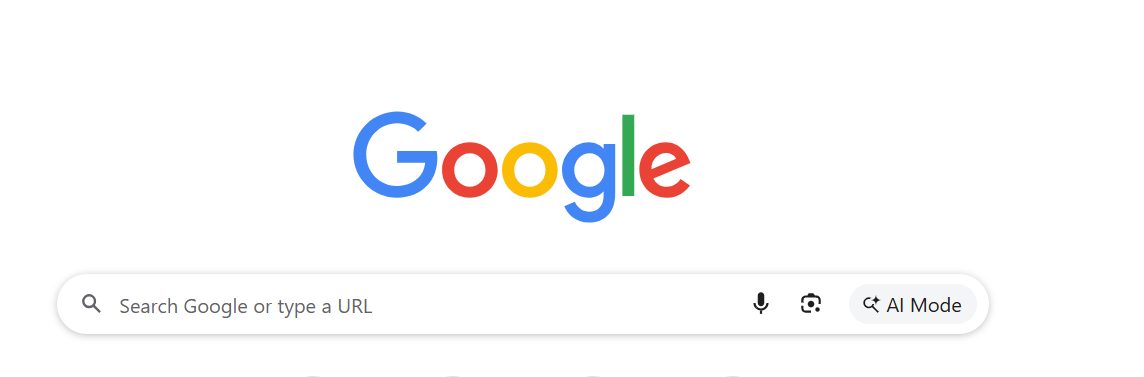
AI Mode Panel in the Google Search Bar
These changes have a direct impact on online promotion. It is now necessary to consider not only traditional algorithms but also the preferences of neural networks. Consequently, digital marketing strategies must adapt to these new realities.
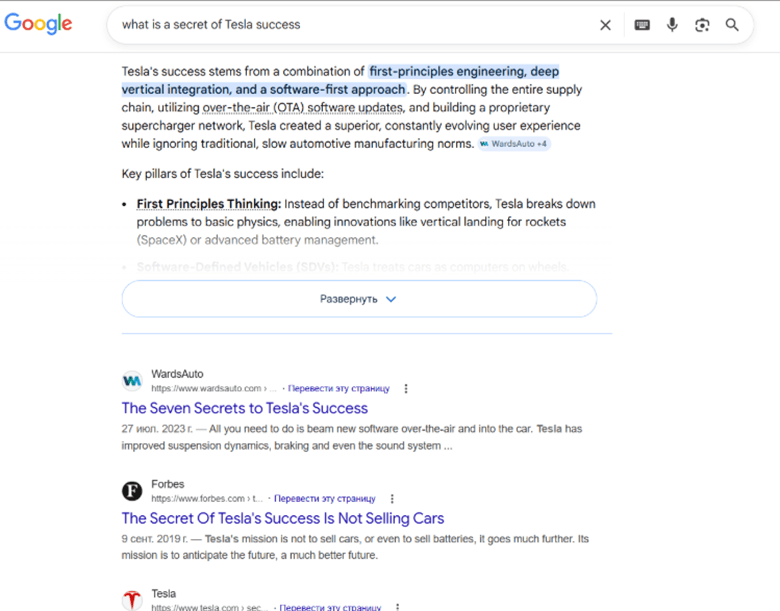
AI-Generated Response Embedded in Traditional Google Search Results
The Influence of UGC and Media
User-generated content (UGC) and media materials are becoming increasingly important data sources for neural networks. Traffic-driven promotion is now closely tied to the ability to appear in priority sources that AI systems rely on. For search optimization in Google and other platforms, it is essential to recognize that AI systems are increasingly serving as the primary interface between users and information.
What determines content selection by AI models
AI visibility depends on understanding the criteria that artificial intelligence algorithms use when selecting sources. Unlike traditional search engines, AI tools do more than simply rank pages — they extract coherent answers from multiple sources, relying on a complex set of factors that determine the value and reliability of information.
For effective search promotion in the era of neural networks, the following factors should be considered:
- A modular text structure with clear headings;
- The inclusion of lists, tables, and structured data;
- FAQ sections;
- Logical division into semantic blocks with subheadings.
Trust is also a critical metric. AI is trained to favor authoritative sources when generating answers. AI-driven search engines are particularly sensitive to freshness; outdated information is a common reason for excluding a source from citations. Systems like Google SGE explicitly prioritize pages marked as “updated,” since AI aims to provide current and reliable responses.
To assess accuracy and relevance, neural networks employ several methods:
- Analyzing information in full rather than judging based on the headline alone;
- Locating and examining the original source, as repeated retellings often introduce distortion;
- Evaluating the reliability of the source based on registration details, editorial team, and audience.
It is worth noting, however, that AI search algorithms are not always completely impartial. For example, Google’s search engine tends to favor UGC content. Notably, Reddit has granted Google access to its user content to train its AI models.
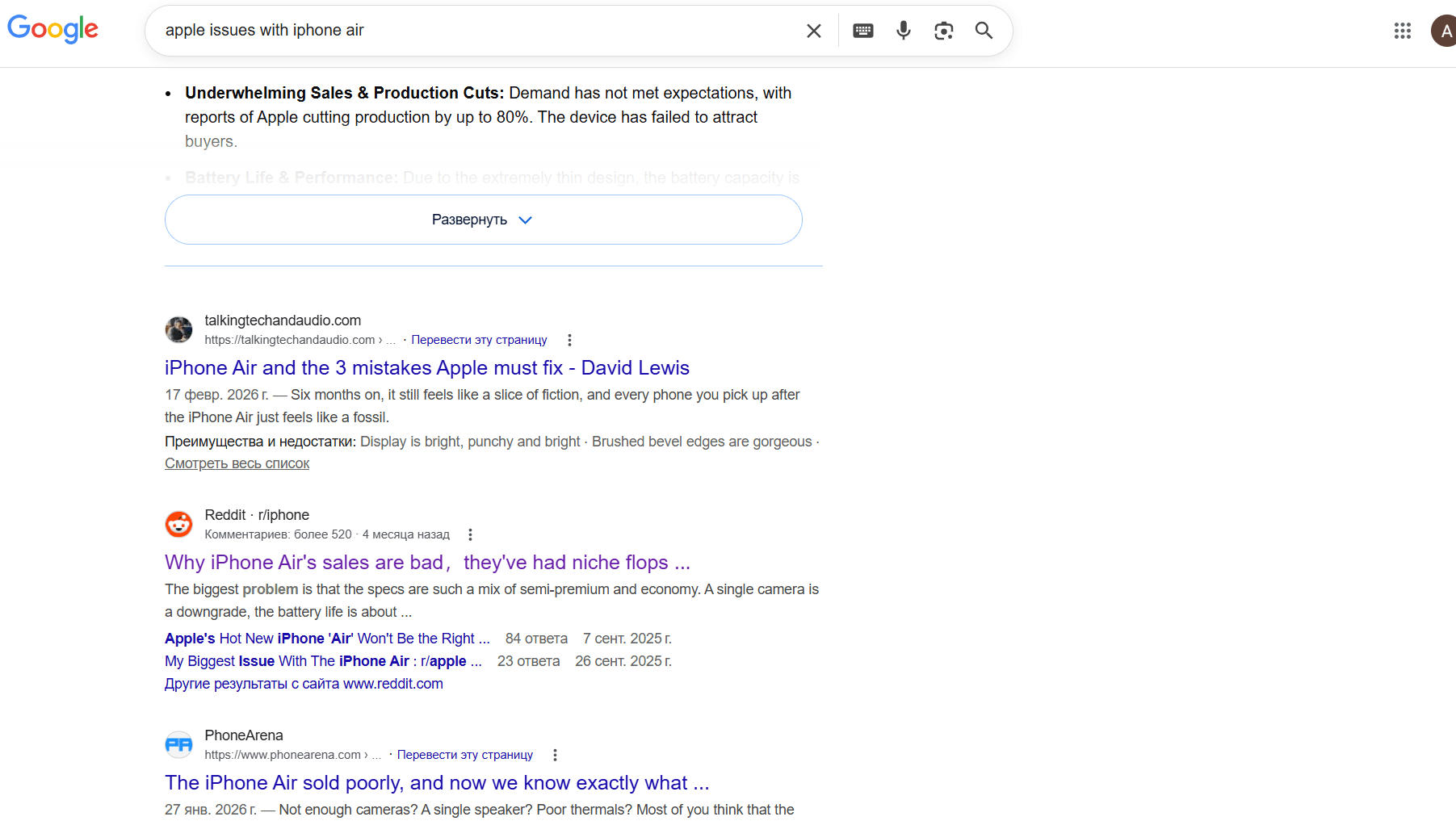
Link to Reddit on the Second Line of Google Search Results
Step-by-Step Guide to Getting Featured in AI Outputs
Having gained an understanding of how neural networks operate, PR professionals can develop a systematic approach to promoting a brand or individual in AI-generated responses, minimizing the risk of undesirable information appearing. Search promotion in the era of artificial intelligence requires five consecutive steps, each contributing to improved visibility in AI outputs.
Auditing Current Presence (Data Collection and Analysis)
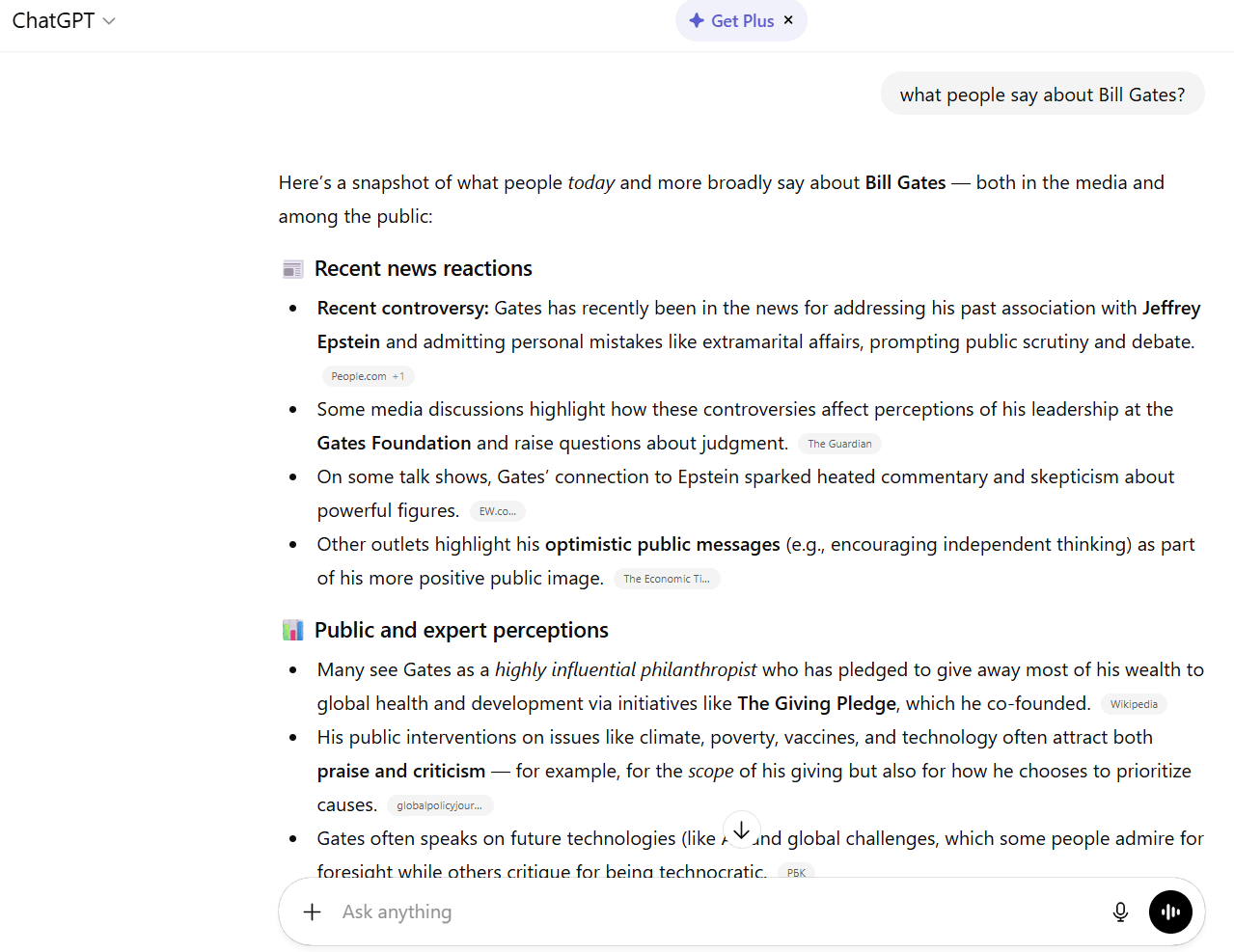
The first step is assessing the current position of a brand or individual in AI-generated responses. An AI audit (neuro-audit) involves a comprehensive evaluation of a company’s, brand’s, or individual’s presence across platforms such as ChatGPT, Google AI Overviews, Perplexity, and DeepSeek. This audit identifies:
- Queries for which the brand or individual is already mentioned, including geographic coverage;
- The accuracy and tone of these mentions;
- The presence of undesirable information, its placement within AI responses, and its sources.
Building a cohesive strategy
A promotion strategy is built based on the results of analyzing current AI outputs and examining the sources of the information that appears. From this analysis, priority areas of work are determined — such as strengthening the digital profile, removing negative content, updating outdated information, and more.
Content creation lies at the core of the strategy. If AI-generated results are unsatisfactory, traditional methods should be applied: update digital profiles, address negative content, and, in particular, counter it with new information (i.e., refresh outdated data that has appeared in AI outputs).
It is important to note that there is no universal formula for promoting content in AI-generated responses. Each situation requires a tailored, case-by-case approach.
Choosing Platforms for Publication
The third step is identifying the most effective platforms for content placement. Neural networks favor authoritative sources, making external publication a key component of Generative Engine Optimization (GEO) — optimizing for AI-generated outputs.
As noted earlier, user-generated content (UGC) also plays a significant role in AI outputs. Therefore, special attention should be given to publications on platforms such as Reddit, Quora, Stack Exchange, GitHub, and others.
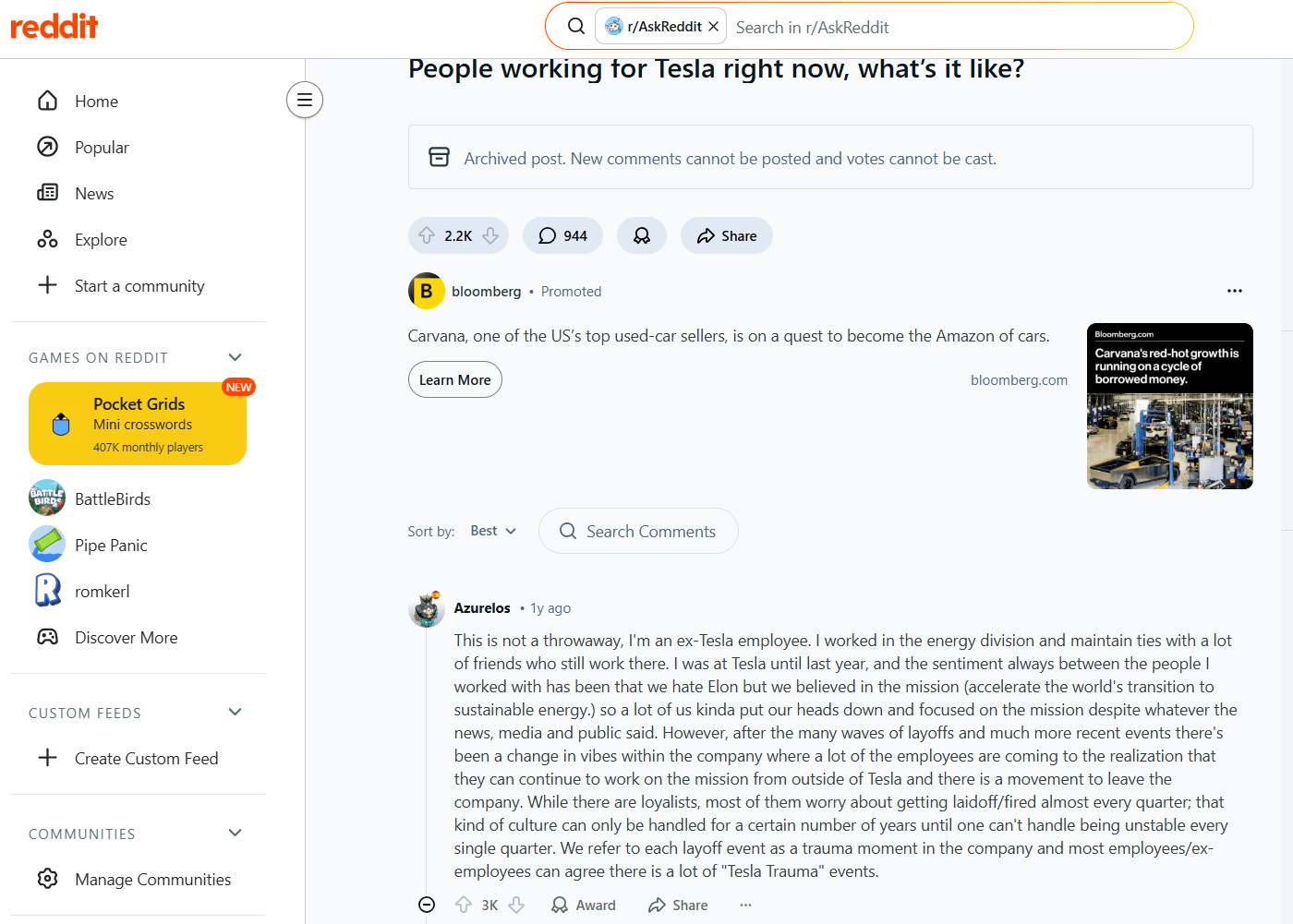
Former employee review of working at Tesla on Reddit
Creating and Optimizing Content
The fourth step involves developing original content optimized for neural networks. Effective search promotion requires creating expert articles, biographical entries, and news publications that can serve as the basis for AI-generated answers. It is important to avoid metaphors and creative expressions, favoring precise and clear formulations.
Next, technical optimization of content for AI crawlers is necessary. For effective search promotion on Google and other platforms, it is crucial to ensure that neural networks can easily access the data. To improve technical accessibility, it is also recommended to create a dedicated “Sources” or “Research” section on the website, linking to the original sources referenced in the articles.
Tracking and Measuring Results
AI-generated outputs aim to present as complete a picture as possible of a brand’s, company’s, or individual’s public perception. Responses may include not only undesirable information, but also rebuttals, critiques, or commentary. The presence of such content demonstrates that even when issues arise, they are not being ignored and efforts are being made to address them. This is illustrated in the screenshot below.
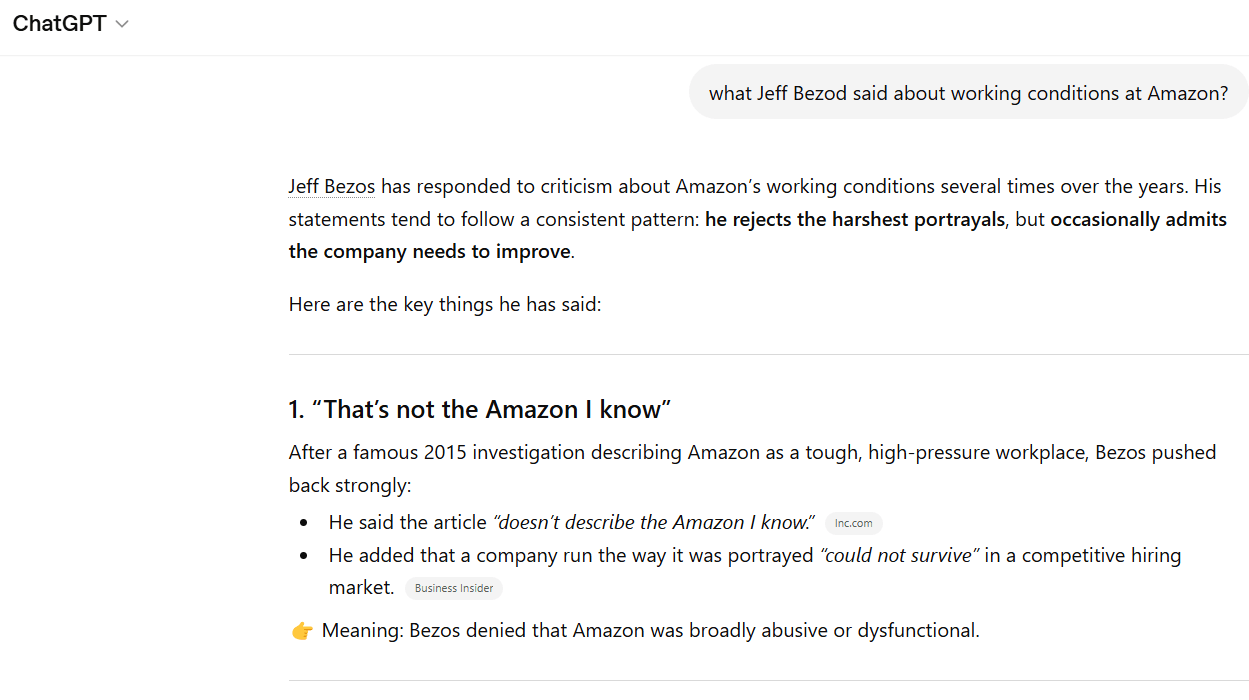
Content Strategy for AI Visibility
Developing an effective content strategy is the cornerstone of success in the new reality of AI-driven search. Understanding which content formats are preferred by neural networks and how to structure information for maximum visibility enables PR professionals to build a systematic approach to promotion in AI-generated outputs.
What doesn’t work with AI models
Uniform content generated by AI is easily recognizable and has a lower chance of appearing in AI outputs. Typical characteristics of such content include standard subheadings, lists, repetitive paragraph structures, and a lack of an authorial voice.
Neural networks tend to ignore texts with the following traits:
- Large volumes of unstructured text;
- Generic, abstract phrases;
- Vague or ambiguous formulations;
- Outdated information and obsolete statistics.
It is also important to note that AI often misinterprets subtext, irony, and hidden meanings. As a result, creative texts with metaphors or literary devices are far less likely to be cited in AI-generated responses.

To optimize content for neural networks, it is recommended to:
- Use content atomization: each paragraph should be self-contained and clearly address a single, specific question;
- Avoid introductory phrases, starting immediately with the main idea;
- Create a modular structure with a logical hierarchy of headings;
- Use linking words such as “therefore,” “as a result,” and “however” to build narrative logic.
The principle of “one block – one semantic module” helps neural networks correctly interpret content. The first sentence of each block should summarize the entire block, as AI primarily relies on it.
The optimal paragraph length is up to 3-4 lines. This allows AI to paraphrase the content and enables search engines to generate concise snippets more accurately. Closing sentences are particularly important, as AI often uses them in responses.
Successful optimization for AI-driven search requires a comprehensive approach that integrates multiple marketing tools. Experts emphasize that GEO (Generative Engine Optimization) does not exist in isolation – it is part of an integrated strategy in which each channel amplifies the overall outcome.
Aligning with SEO
Optimization for generative outputs is essentially a symbiosis of GEO and ORM (online reputation management). It is important to understand that GEO does not replace traditional SEO — rather, it represents a new consumer sector developing alongside the rise of AI-driven search. For a website to be considered a source by AI systems, it must maintain strong positions in organic search.
The Role of Reviews and Content as a Multi-Channel Asset
Today, AI is already capable of developing comprehensive content strategies, creating publication scenarios, and planning calendars based on trends. In this context, feedback — or user-generated content — becomes particularly valuable, as it is highly ranked by neural network search algorithms. The quantity, recency, and quality of reviews directly affect ranking in AI-generated responses. Systematic management of reviews not only increases the chances of appearing in AI outputs but also helps attract more clients.
In the era of neural networks, content has become a universal asset that must perform effectively across all communication channels. An optimal strategy involves creating modular content that can be easily adapted to different formats.
Conclusion
It is now clear to almost everyone that AI represents the future of search engines. However, the share of queries processed exclusively by AI remains relatively small. Around 90% of global search queries still occur through traditional search tools, primarily Google. Pure AI tools (excluding AI features embedded in traditional search engines) account for only 2–10% of queries. Nevertheless, the proportion of AI in the global search ecosystem is expected to grow steadily in the future.
In this context, it is already essential to adapt current promotion strategies to account for AI-driven search. The most viable approach integrates GEO with traditional SEO and other PR tools. Effectively leveraging all available channels can significantly enhance a brand’s or individual’s presence in both traditional and AI-generated search results.
Optimization for neural networks should not be viewed as a temporary trend, but rather as a long-term strategic direction that requires a systematic approach and continuous skill development.

FAQs
Q1. How can I increase the visibility of a brand or individual in AI-generated responses?
To boost visibility in AI outputs, it is necessary to create structured biographical, expert, and news content, publish it on authoritative platforms, use data markup schemes, and regularly update information. It is also important to work on the brand’s citability and its mentions across various sources.
Q2. What content formats do neural networks prefer?
Neural networks favor original textual content that is structured to align with how AI algorithms process information. Clear organization with a logical hierarchy of headings and division into informational blocks is crucial.
Q3. How should I handle inaccurate data in AI-generated outputs?
In addition to addressing the original sources of such data, it is effective to publish content that presents alternative viewpoints on the topic. Materials framed as “critique of the critique” help generate more balanced AI responses to user queries.